
The Comstock process
The old-school method makes a better cup.
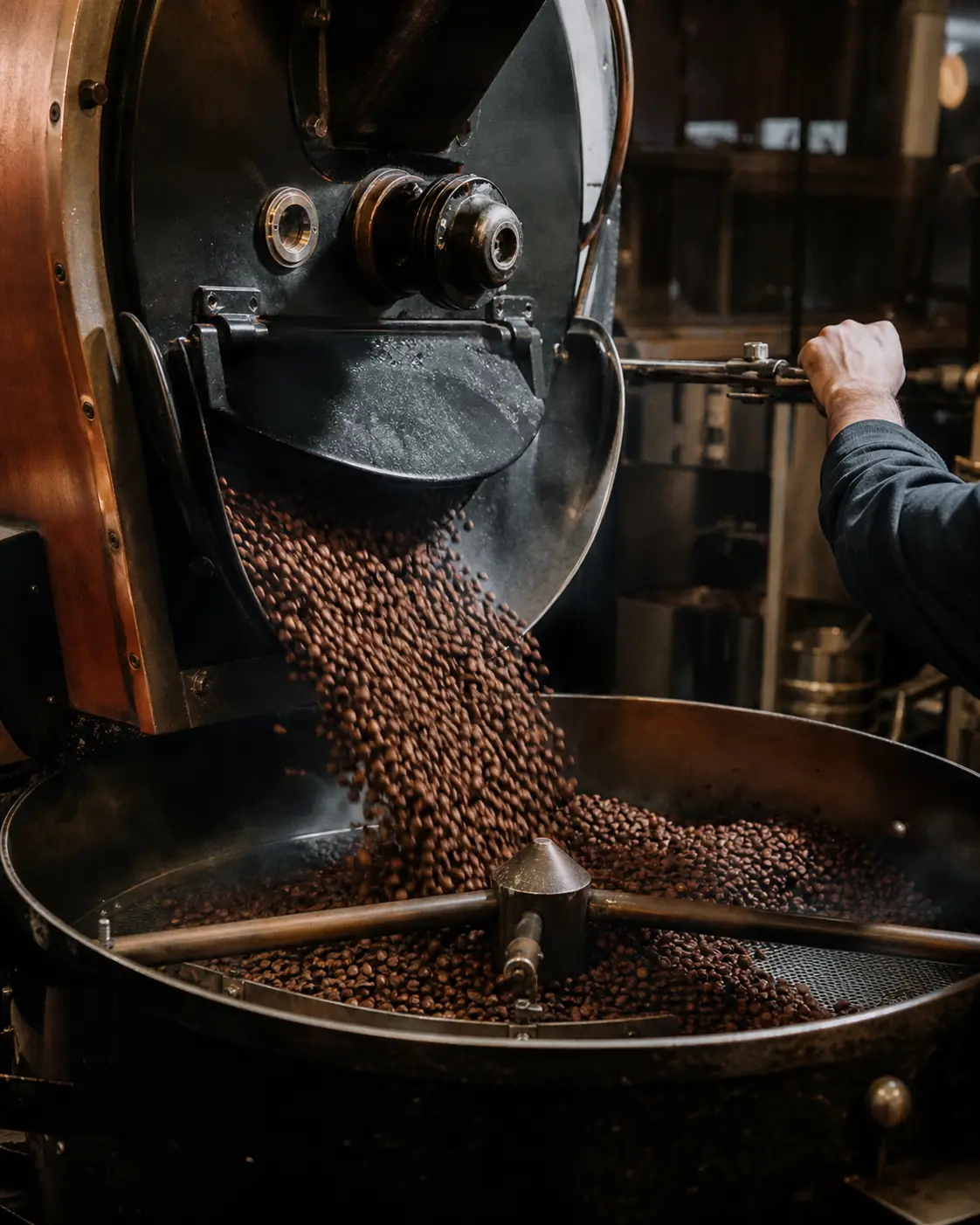
A European-style drum roaster takes patience. Fortunately, the machine has more of it than most people before breakfast.
01 · Selection
Good roasting begins before anything gets hot.
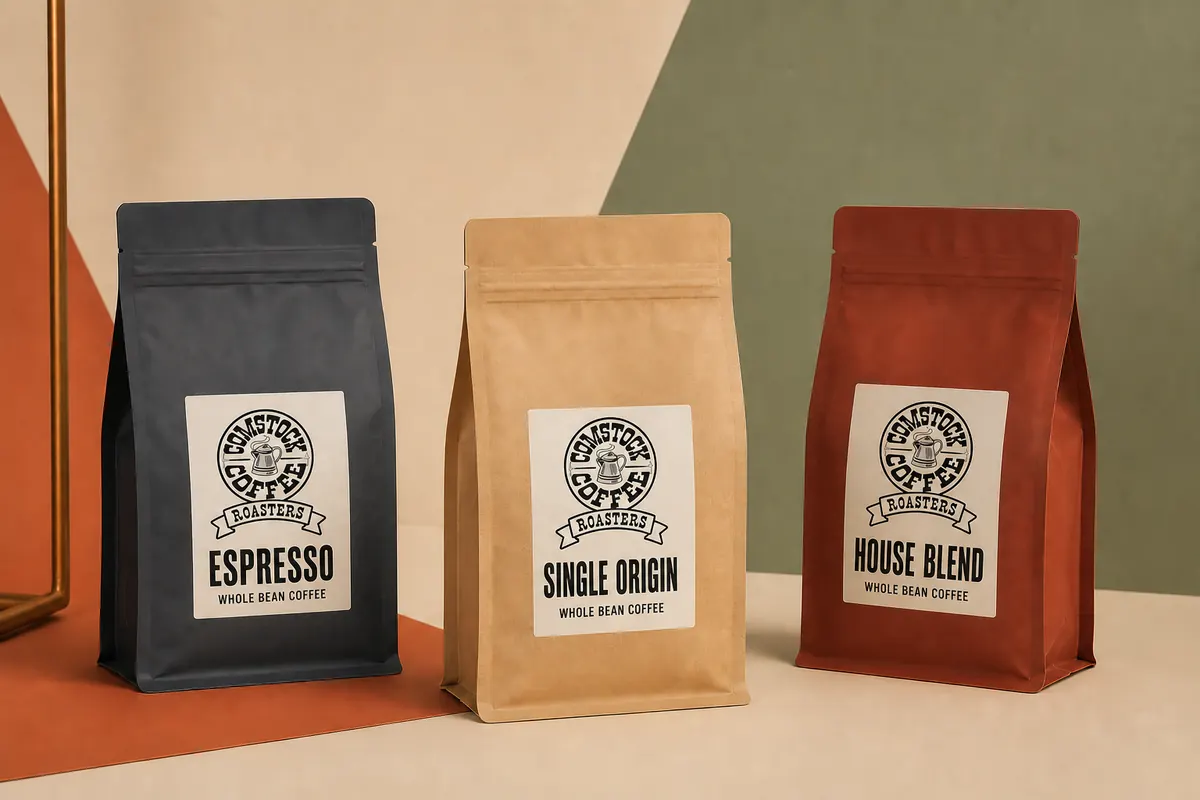
Comstock’s existing standard starts with selecting quality green coffees from around the world. Blends, single origins, estate coffees, light and dark directions, espresso, and decaf all begin with the same requirement: the coffee has to deserve the roaster’s attention.
Specific farms, producers, processes, and certifications will appear only when the active coffee roster supplies them. A colorful story is useful; an accurate one is better.
02 · Drum roasting
Heat, airflow, time, and the useful habit of paying attention.
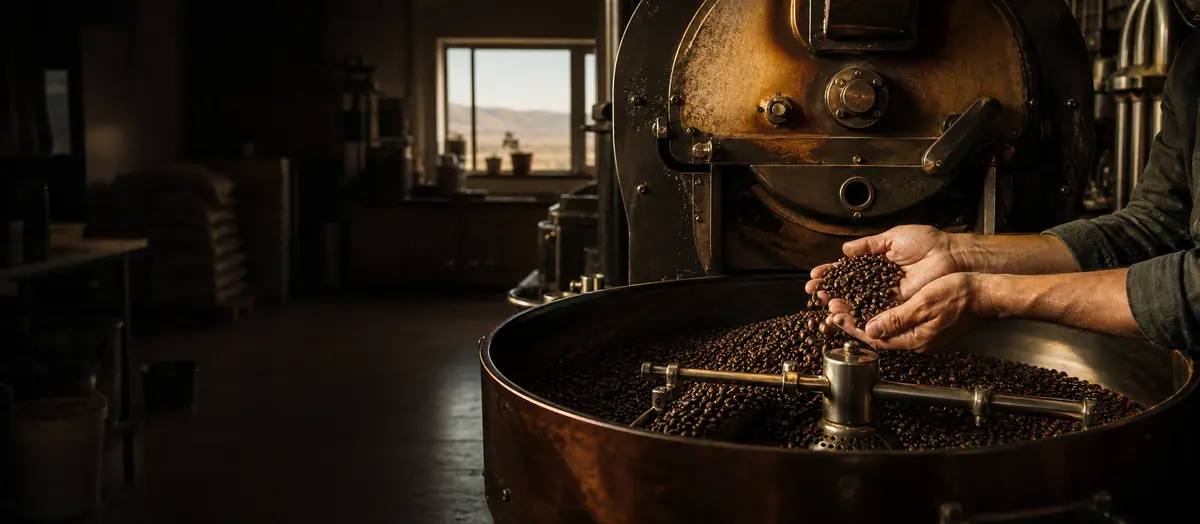
Comstock uses a traditional European-style drum roaster to build the full, rich, three-dimensional character described on the original site. The method rewards steady observation instead of dramatic gestures, which is fortunate around hot machinery.
We do not publish an equipment model, batch size, temperature curve, or roast schedule until those facts are confirmed. The cup is allowed some mystery; the website is not allowed fabrication.
03 · Decaf standards
Less caffeine. No reduction in respect.
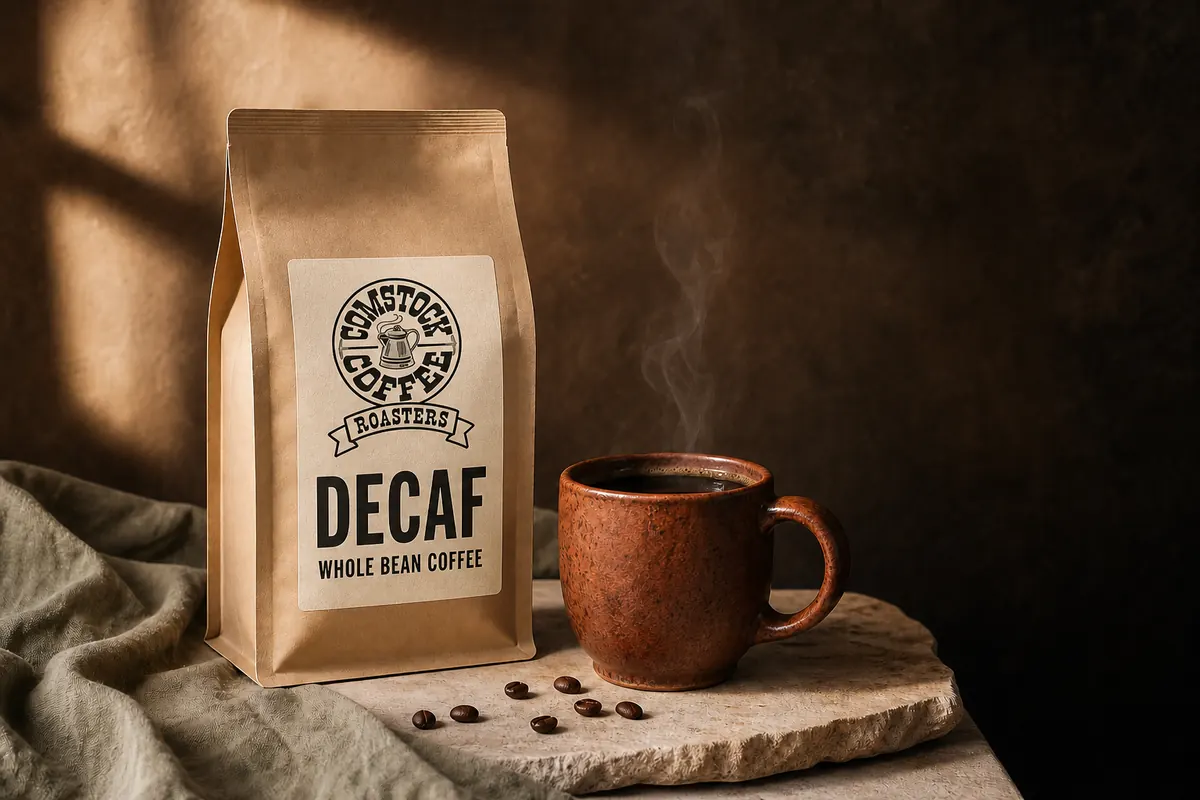
Comstock applies the same standards of quality, freshness, and selection to decaf as to every other coffee. This is not generosity. It is simply what happens when a roaster remembers that decaf is coffee.
No decaffeination method is named until the current coffee data confirms it.
04 · Roast, date, pack, send
Freshness with paperwork.
Coffee is roasted after the order is received, placed in its package, and marked with the roast date before it is sent to the customer’s door. The date is a small act of honesty and a convenient answer to the question, “How fresh is this?”